
Getting Up Off the Floor: The Most Useful Thing Nobody Trains
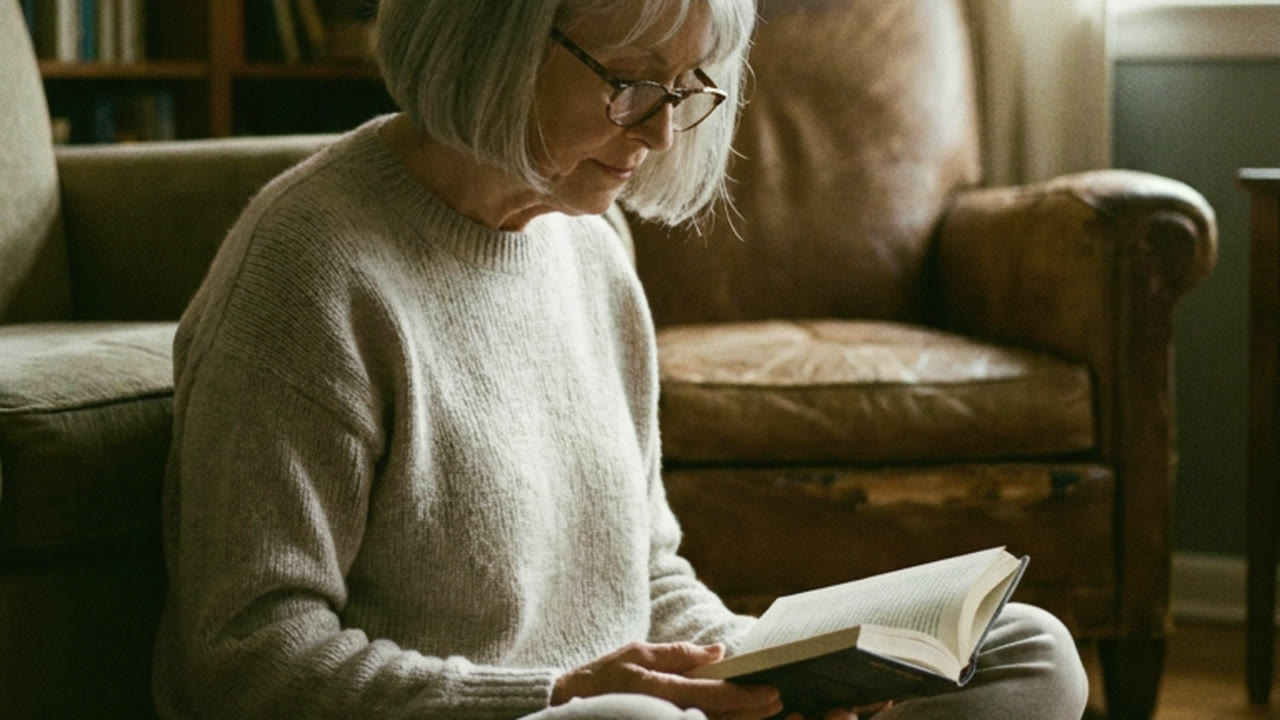
It needs leg strength, hip rotation, ankle range, balance and confidence all at once, which is why it degrades early and quietly. How to test yourself, and the simplest fix there is.
Getting up off the floor is the most useful thing your body does that nobody trains.
It is also one of the clearest predictors of how the next thirty years go, and almost every woman I meet has quietly stopped practising it without noticing.
Why it matters more than it sounds
Researchers have studied a simple test, sitting down on the floor and standing back up, using as little support as possible. Scores on it track surprisingly well with outcomes over the following years.
Not because floor-rising is magic. Because it requires nearly everything at once: leg strength, hip mobility, ankle range, balance, core control, and the confidence to commit your weight to a position you cannot easily reverse.
Lose any one of those and the whole thing becomes difficult. Which is why it degrades early and quietly, long before anything shows up as a problem.
The bit nobody mentions
Most women do not stop getting up off the floor because they cannot. They stop because they stopped going down there.
Chairs, sofas, beds, raised garden beds. Modern life removed the floor from the day entirely, and the ability went with it. It is not that your body declined and then you avoided it, you avoided it, and then it declined.
Which is genuinely good news, because it means the intervention is embarrassingly simple.
Test yourself
Do this near a sofa or a wall, and not at all if you are already unsteady on your feet.
From standing, lower yourself to sitting on the floor. Then stand back up. Notice how much you used your hands, a knee, or furniture.
No hands at all is excellent. One hand is good. Two hands and a knee is common in women over fifty. Needing furniture to get up is worth taking seriously, not as a failure, but as a clear signal of what to work on.
Repeat it in a month and you will very likely have improved, because this responds fast.
What it actually needs
Leg strength through a deep range. Squats to a low surface, gradually lower. Most women can squat to a dining chair and cannot squat to the floor, and the gap between those is exactly the ability in question.
Ankle range. If your ankle will not bend, your knee cannot travel forward, and rising from the floor gets much harder. Covered in Knee Pain Is Usually Not About the Knee.
Hip mobility, particularly rotation. Getting to and from the floor involves the hip rotating in ways nothing else in your day requires. More in Stiff Hips Are Usually the Real Problem.
Single-leg strength. Almost every version of rising passes through one leg carrying most of you.
Practice. Genuinely. It is partly a skill, and skills need rehearsing.
The simplest thing you can do
Sit on the floor in the evening.
That is it. Watch television from the floor rather than the sofa for twenty minutes. Shift positions when you get uncomfortable, cross-legged, legs out, side-sitting, kneeling. Get up when you need to and go back down.
You will accumulate more hip rotation, ankle range and floor-rising practice in a week of that than in a month of dedicated stretching, and it costs you nothing.
This is the single piece of advice I give that women most often come back and thank me for, mostly because it does not feel like exercise.
If you cannot get up unaided right now
That is worth addressing directly rather than avoiding, and it is very trainable.
Start higher. Practise rising from a low stool, then a lower one, then a cushion on the floor. Work the strength alongside it, sit-to-stands from a chair, step-ups, single-leg work. The range and the confidence come back together.
Please do have someone with you while you build it back, and if you have had a fall or you are unsteady, get assessed properly first.
This is exactly the sort of thing I work on with women at the studio, and it is far more common than anyone admits. Start with a conversation, there is no version of this that is too basic to work on.
When the mind needs somewhere to land
Everything in this wing points, in the end, to the same place, the breath, and the nervous system beneath it. It is why I built SOVA: a quiet companion for the moments in between.
- Today, a daily practice that aligns you before the day pulls you a dozen directions.
- Companion, a place to process any feeling, even the happy ones.
- Pages, a soft place to set your thoughts down and out of your head.
- The House, rooms of calm to step into, whenever you need one.