
Stiff Hips Are Usually the Real Problem
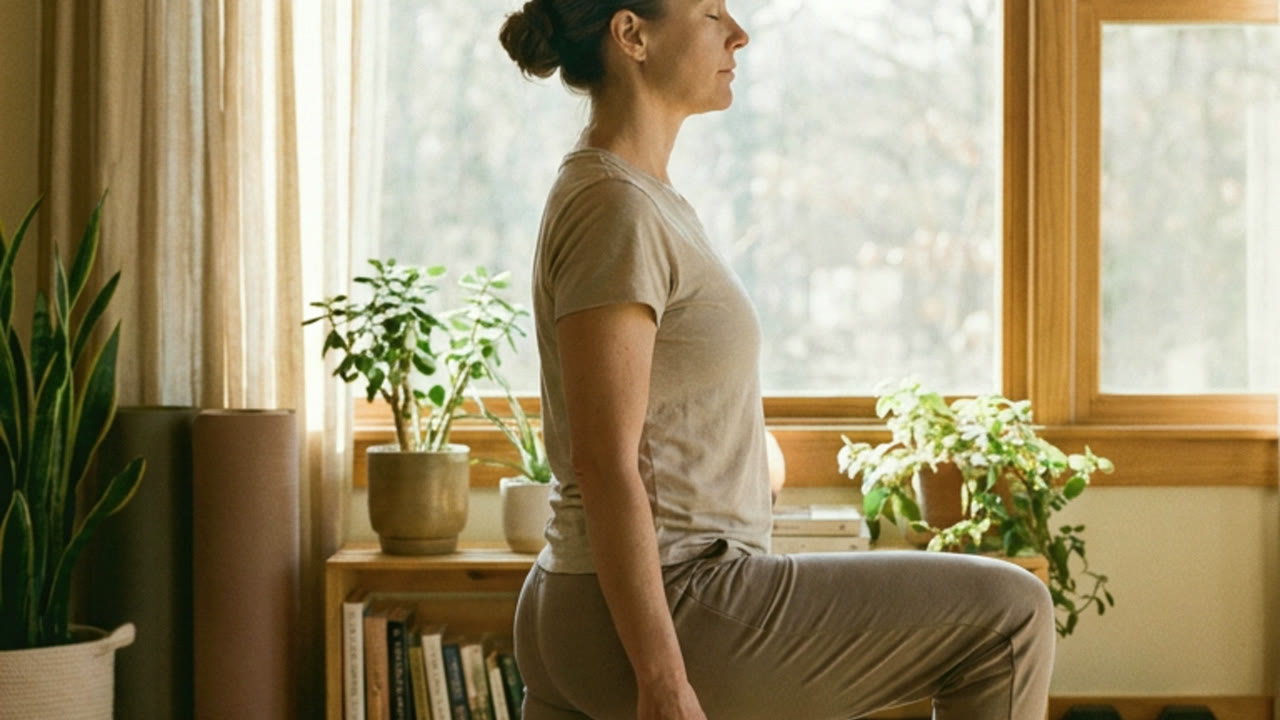
The back that aches is often the joint covering for a neighbour. Why sitting shortens the front of the hip and switches off the glutes, the difference between mobility and flexibility, and four things worth doing.
If I could pick one area to work on for most women who sit for a living, it would not be the back that hurts. It would be the hips that stopped moving.
They are almost always where the trouble started.
Why stiff hips cause problems elsewhere
Movement has to happen somewhere. When you bend to pick something up, or twist to reach behind you, or step up onto something, that range comes from a chain, ankles, knees, hips, spine.
If the hips do not contribute, the movement does not simply not happen. It gets borrowed from whatever is willing, which is usually the lower back.
So the back that aches is frequently not the problem. It is the joint that has been quietly covering for a neighbour for years. That is why stretching it brings twenty minutes of relief and no lasting change, you are treating the site of the symptom rather than the source of the load. More on that in Back Pain: What Actually Helps.
What sitting actually does to a hip
A hip flexor spends the working day shortened. Tissue adapts to the position it is held in most, so it gradually settles at that length.
Then you stand up. The shortened front of the hip pulls the pelvis into a forward tilt, which increases the arch in the lower back and compresses the joints there. You have been standing for four seconds and the loading is already wrong.
Meanwhile the glutes, sat on all day, become slow to switch on. Which means when you do ask the hip to extend, walking, standing from a chair, climbing stairs, the muscle that should do it is late, and the lower back and hamstrings take the work instead.
Mobility is not flexibility
Worth separating, because they are often confused and they need different things.
Flexibility is how far a joint can be moved passively. Someone else pushes your leg and it goes there.
Mobility is how far you can move it yourself, with control, under your own power.
The gap between them is where injuries live. A hip that can be pushed into a wide range but cannot get there actively is a joint with territory it does not control. Stretching alone widens that gap. Strength through range closes it.
This is why endlessly stretching hip flexors often achieves so little. The range was rarely the missing piece.
Four things worth doing
Open the front of the hip daily. A half-kneeling lunge, back knee down, gently tucking the pelvis under and easing forward. Thirty to sixty seconds each side. This counteracts the single most predictable effect of a sitting day.
Wake the glutes up before you need them. Bridges, or standing hip extensions holding a chair. Twenty repetitions takes a minute and changes what happens when you walk.
Rotate. Hips rotate internally and externally, and almost nothing in modern life asks for either. Sit on the floor, knees bent, and drop both knees side to side. Slow, controlled, both directions.
Load the range you have. Squats to a chair, step-ups, split squats. Strength through the range is what makes mobility permanent rather than something that lasts until Thursday.
Where Pilates is unusually good at this
Because the equipment lets you work the hip in ranges you cannot yet control unaided.
Springs can assist a movement, which means you can move through a range with support while building the strength to own it. On a mat you are limited to what you can already do. On a reformer, the machine holds part of the load while your hip learns the rest.
It also trains the hip and the trunk together, which matters because a hip only moves well from a stable pelvis. Working them separately misses how they actually function.
What to expect
Hips respond faster than people assume. Two weeks of daily attention usually produces a noticeable change in how it feels to stand up after sitting.
Lasting change, the kind where your back stops complaining, takes longer, because that requires the glutes to reliably do their job rather than merely being able to.
If your back has been grumbling and you have been stretching it without much success, the hips are where I would look. Come and have it assessed properly rather than guessing which joint is the culprit.
When the mind needs somewhere to land
Everything in this wing points, in the end, to the same place, the breath, and the nervous system beneath it. It is why I built SOVA: a quiet companion for the moments in between.
- Today, a daily practice that aligns you before the day pulls you a dozen directions.
- Companion, a place to process any feeling, even the happy ones.
- Pages, a soft place to set your thoughts down and out of your head.
- The House, rooms of calm to step into, whenever you need one.