
Knee Pain Is Usually Not About the Knee
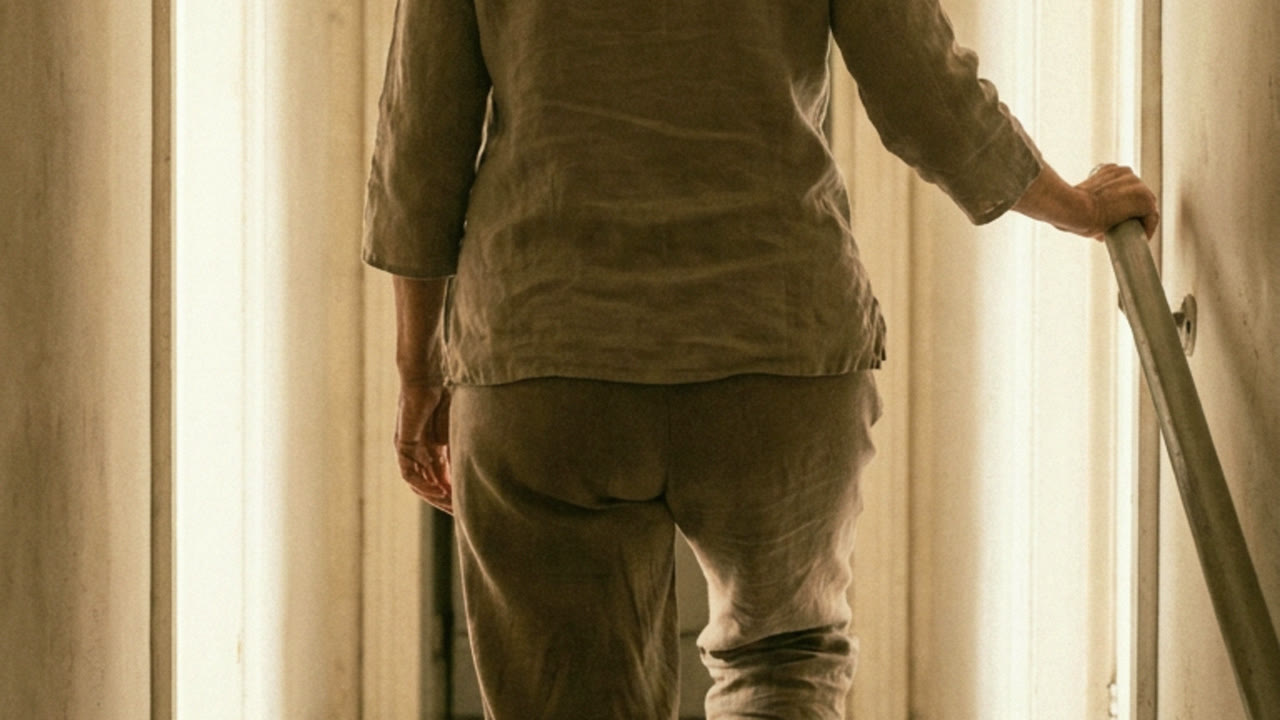
The knee sits between two joints built to move in every direction. When the hip or ankle stops contributing, the knee absorbs the difference. The three patterns behind most knee pain, and why rest is rarely the answer.
Knees get blamed for a great deal that is not their fault.
They are a simple joint, mostly a hinge, bending and straightening with a little rotation. They sit between two joints that are built to move in every direction: the hip above and the ankle below. When either of those stops doing its job, the knee is what absorbs the difference.
The knee is usually the victim
A hip that does not rotate or extend properly, or an ankle that does not bend, forces movement to happen somewhere. The knee is the joint in between, and it will oblige, but in directions it was never designed for.
Which is why the most useful thing I can do for a painful knee is often to look at the hip and the ankle. Women arrive expecting knee exercises and are surprised when we spend the first session on hip control and ankle range.
It is also why so many knee programmes fail. Strengthening the muscles around a joint that is being mis-loaded from above just makes it stronger at absorbing something it should not be absorbing.
The three most common patterns
Knee falling inward. Watch yourself go up a step or stand from a chair. If the knee drifts toward the midline, that is usually glute weakness, specifically the muscles on the side of the hip that stop the thigh rotating in. It is the single most common thing I see, and it is very trainable.
Stiff ankles. If your ankle cannot bend enough, your knee cannot travel forward over your foot, so squatting and stair descent get loaded strangely. Test it: kneel with one foot flat in front, drive that knee forward over the toes without lifting the heel. Most people are surprised how little they have.
Everything through the front. Quads doing all the work while glutes and hamstrings sit out. Common in women who sit all day, and it loads the kneecap heavily.
What actually helps
Strengthen the hip, particularly the side of it. Side-lying leg lifts, banded walks, single-leg work. If the knee stops collapsing inward, a great deal resolves without touching the knee.
Get the ankle moving. Calf stretches, and knee-over-toe drills at the wall. Range at the ankle changes what the knee has to tolerate.
Load the knee properly, not carefully. This surprises people. Painful knees generally need more strength, not less, the tissue needs capacity. Well-chosen loading through a pain-free range is protective, and avoidance makes things worse over time.
Train single leg. Life happens one leg at a time. Two-legged exercises let the stronger side quietly compensate, which is often how the imbalance persisted.
Does Pilates help knees?
It suits them particularly well, for one specific reason: on the equipment you can load a leg in a supported position where the alignment can be watched and corrected.
A woman whose knee collapses inward under body weight can work on a reformer with the load adjusted to a level where the alignment holds. Then it is increased. That is a very different proposition from telling her to squat and hoping the pattern improves on its own.
The springs also let you work through a range with assistance, which matters if the pain-free range is currently small.
What about arthritis?
Worth addressing, because the word frightens people out of moving.
Osteoarthritic knees generally do better with appropriate movement than with rest. Cartilage has no blood supply and relies on load and movement for nutrition. Sensible loading tends to help symptoms; prolonged avoidance tends not to.
Scan findings also correlate poorly with pain, plenty of people have significant changes on imaging and no symptoms at all. A diagnosis is not a prognosis.
What to avoid is the extremes: deep loaded flexion that hurts, and doing nothing.
When to get it checked
Locking, giving way, significant swelling, an inability to straighten it fully, or pain following a specific twisting injury, see someone. Those suggest something structural rather than mechanical.
Everything else is usually a loading problem, and loading problems respond well.
If your knee has been complaining and nobody has looked at your hips and ankles, that is where I would start.
When the mind needs somewhere to land
Everything in this wing points, in the end, to the same place, the breath, and the nervous system beneath it. It is why I built SOVA: a quiet companion for the moments in between.
- Today, a daily practice that aligns you before the day pulls you a dozen directions.
- Companion, a place to process any feeling, even the happy ones.
- Pages, a soft place to set your thoughts down and out of your head.
- The House, rooms of calm to step into, whenever you need one.