
How to Choose Dairy & Milk
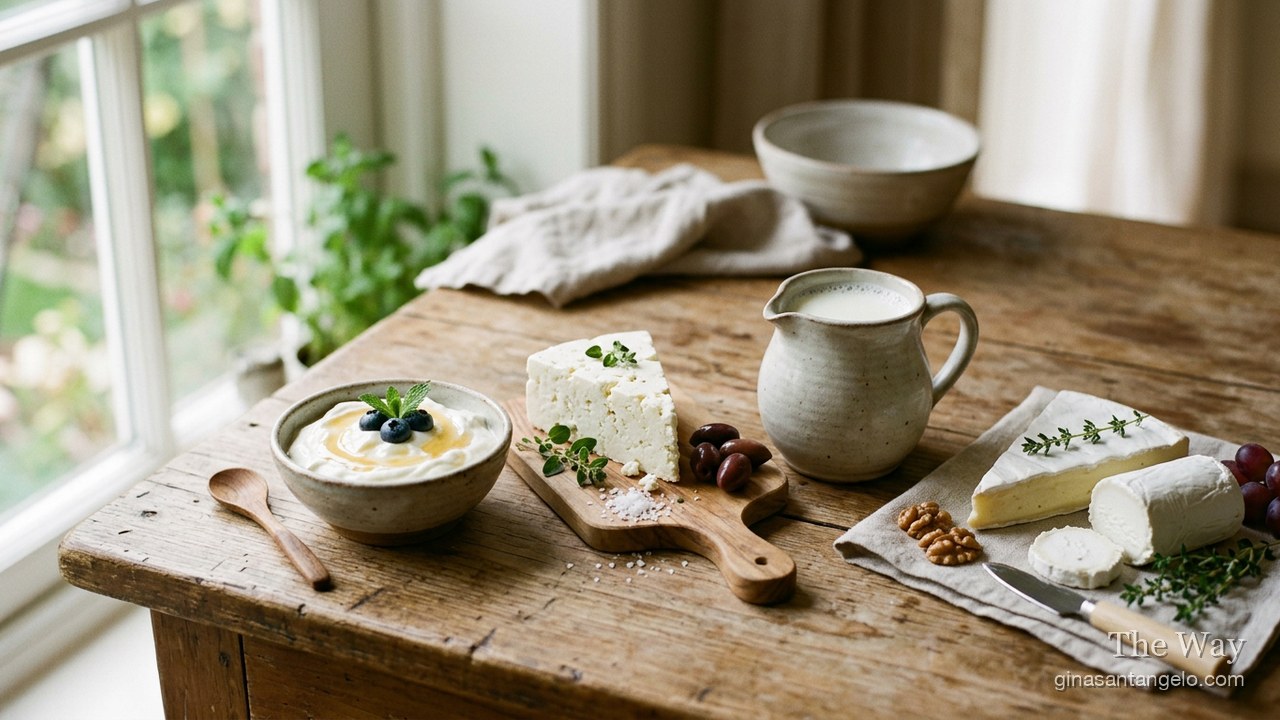
There's no one right answer on dairy, but if you keep it, choose grass-fed organic, enjoy it in smaller amounts, and notice how your own body feels.
My honest two cents
Dairy is one of those foods everyone has an opinion about. Mine is simple: pay attention to your own body. If you feel good with dairy, wonderful. If you're not sure, try leaving it out for a week or two, then reintroduce it and notice the difference. In my experience, a lot of people feel a little better with less.
If you keep it, choose well
Reach for grass-fed organic dairy, ideally raw or vat-pasteurized organic (pasteurized more gently, at a lower temperature, to keep more of the good stuff intact), and enjoy it in reduced quantities.
Sheep, goat or cow?
Most dairy is cow's milk, but it isn't your only option, and for some of us, not the easiest one. Sheep's milk (feta, pecorino, manchego, and some rich yogurts) is higher in protein and fat, deeply flavored, and many people find it gentler to digest. Goat's milk is tangy and light, with smaller fat globules some find easier on the stomach. Cow's milk is the familiar, mild, everyday one. If cow dairy doesn't quite sit well with you, a good sheep or goat cheese is well worth trying, I reach for sheep's-milk feta and pecorino often, in small amounts.
You don't need dairy for calcium
Dark leafy greens, canned salmon or sardines with the bones, sesame seeds, and nuts all deliver calcium beautifully, so dairy is a choice, not a requirement.
The plant-milk option
Almond, oat and other plant milks are lovely in smoothies and cooking. Just check the label and choose unsweetened, the flavored ones hide a surprising amount of sugar.
You don't have to pick a side in the dairy wars. Choose the best quality you can, enjoy it in moderation, and let your own body be the tie-breaker.