The Pelvic Floor
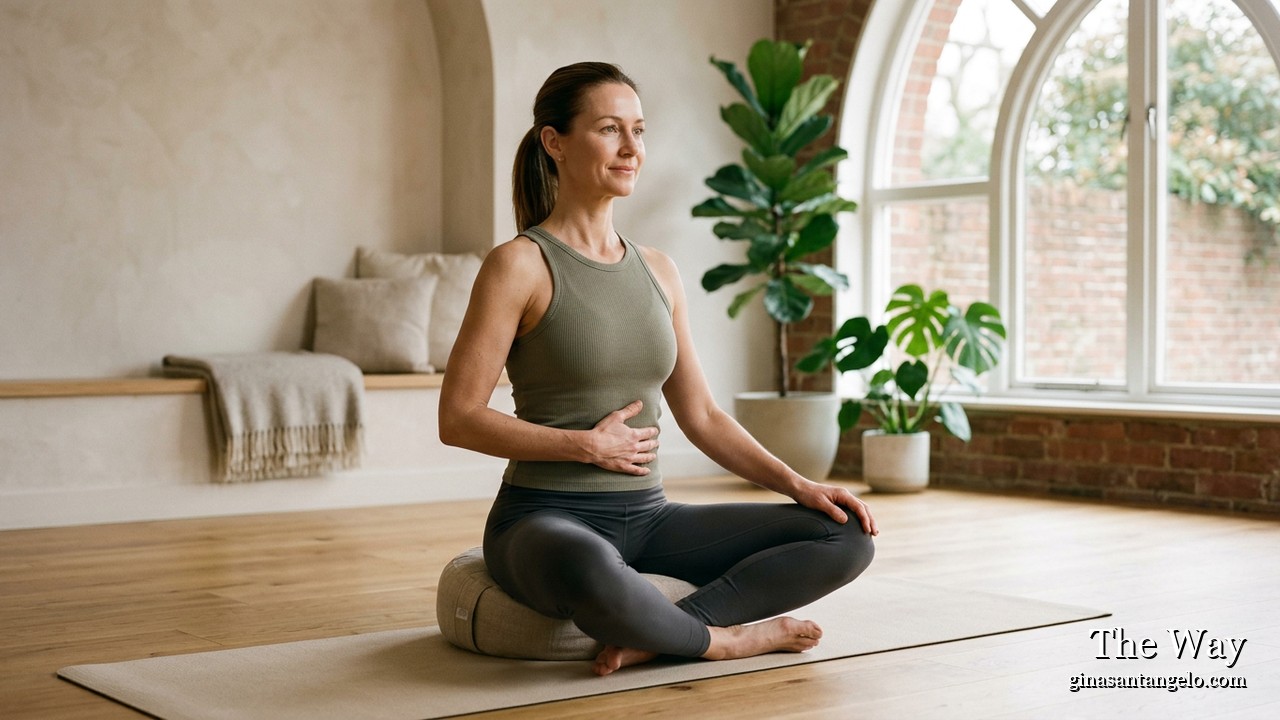
The pelvic floor is the anchor for every exercise I teach, a hammock of muscles at the base of the pelvis. This part is entirely my own.
I was introduced to the pelvic floor early on, and I have studied it ever since, it’s become a bit of an obsession. It is the anchor for every exercise I teach, and when it is engaged properly, the benefits are incredible.
The pelvic floor is a hammock, or small saucer, of muscles at the base of the pelvis. It supports the organs of the pelvis and stabilizes the spine and the whole body. When it is lightly engaged, the deep transverse abdominals fire and the core ignites.
A word of care
The wrong exercises can create real trouble here. A program that causes too much tightening around the pelvis can leave the pelvic floor itself too tight, which can lead to leakage and weakness. The motion of engaging it is small and effortless. If the pelvis curls or shifts, you have over-engaged, ease off.
Engage your pelvic floor
Lie on your back, spine neutral, knees bent, feet hip-width apart, arms relaxed at your sides, palms up.
- Inhale, think of drawing your pubic bone toward your tailbone and lifting up from the center.
- Exhale, draw the muscles at the base of the pelvis slightly in and up.
- Inhale, stay.
- Exhale, imagine your two sitz bones narrowing gently toward each other. This anchors the pelvic floor and fires into the deep abdominals.
- Inhale, stay. Exhale, release.
Repeat three to five times. Over time, your body begins to engage the pelvic floor on its own, all day long, without overtaxing it. Please don’t force the hold, an over-tight pelvic floor causes its own problems. Gently contract, then release.
Keep it simple: lift up, pull in, release.
Go deeper: The Pelvic Floor, Beyond Kegels → · Ready to practice? Pelvic Floor Foundations →