
The Low-Tox Home
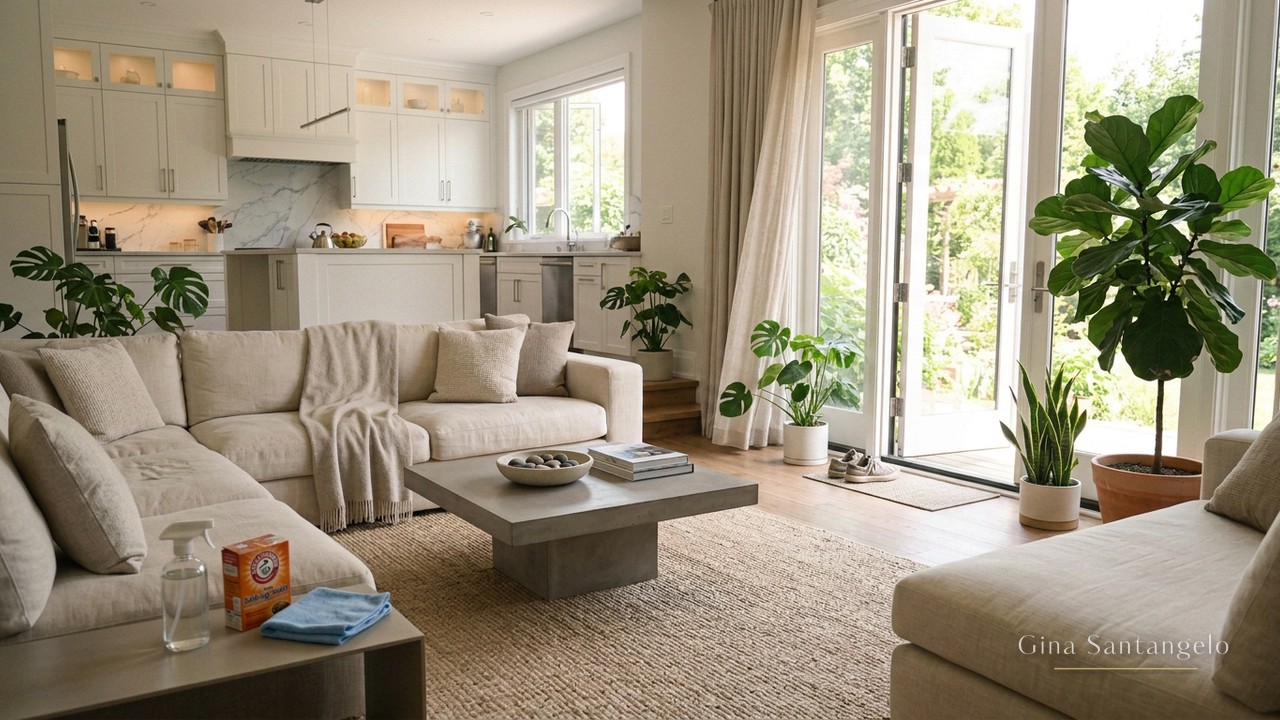
Most homes hold more chemistry than we realize, in the cleaners, the dust, the air, the very things we sleep and sit on. You don't need a hazmat suit or a panic; you need a few simple swaps, made over time. As I say in my book: do the best you can, but don't let it make you crazy, stress is its own kind of poison. Every healthy change counts.
Start at the door
The bottoms of your shoes carry in dirt, lead dust, pesticides, PFAS from the outdoor world, and road grime from everywhere you've walked. Taking them off at the door is the single easiest way to keep the worst of the outside out. (Slippers are a fair trade.)
Clear the indoor air
Indoor air is often more laden than the air outside, and household dust is one of the biggest carriers of flame retardants, PFAS, and pesticides. A few easy habits do most of the work: open the windows whenever the weather allows, change your HVAC filters on schedule, vacuum with a HEPA filter, and damp-dust rather than dry-dust, so you lift the dust out instead of stirring it up.
A word on fragrance
This one deserves its own line. Plug-ins, scented candles, air fresheners, dryer sheets, fabric sprays, and strong perfumes can each carry dozens, sometimes hundreds, of ingredients that don't have to be disclosed, because “fragrance” is treated as proprietary. If you love scent, you don't have to give it up; look for fragrance-free products, or ones scented with essential oils that genuinely agree with you.
Clean green
You can retire most of the harsh stuff. Vinegar disinfects, baking soda scrubs, and hydrogen peroxide lifts stains. Add an unscented dish soap, a fragrance-free laundry detergent, a few microfiber cloths, and a steam cleaner if you like, cheaper, effective, and kinder to whoever's breathing it. One safety note: never mix vinegar and bleach.
Laundry
Dryer sheets, scent boosters, and fabric softeners are mostly fragrance and coating. A fragrance-free detergent and a set of wool dryer balls do the same job without the load.
Your skin counts too
Beyond toothpaste, look at shampoo, body wash, lotion, sunscreen, makeup, nail polish, and deodorant. You don't have to replace everything at once, just choose a simpler product as each one runs out.
Filter your water
Filtered water belongs here as much as in the kitchen. Filter your drinking water with something certified for the contaminants that matter where you live, add a shower filter if you like, and consider reverse osmosis if it suits your home.
The kitchen, in short
The kitchen is a world of its own, cookware, storage, utensils, boards. The short version: glass storage, stainless steel, cast iron, good ceramic, and wood utensils. For the full walk-through, see the Toxic-Free Kitchen guide.
Plastics
A few simple rules cover most of it: don't microwave plastic, don't leave plastic water bottles in a hot car, replace containers once they're cracked or cloudy, and prefer glass whenever it's practical.
Furniture & textiles
A newer thing to know: sofas, mattresses, and fabrics can carry flame retardants, stain-resistant treatments, and forever-chemical coatings. Nothing to panic over, just something to weigh over time, and a good reason to wash new sheets and clothing before you use them, to rinse off some of the manufacturing residue.
Mind the moisture
Quietly one of the most important. Fix leaks promptly, run the bathroom fan, keep indoor humidity somewhere around 30–50%, and address visible mold rather than painting over it.
Plants & purifiers
Houseplants won't scrub your air the way the old studies suggested, and that's fine; that isn't why we keep them. They bring beauty and a little of the outdoors inside, and a home that feels calmer is its own kind of healthy. When you do want cleaner air, a true HEPA purifier earns its place, especially for allergies, asthma, wildfire smoke, pets, or a city street outside your window.
Your home should support your health
And it isn't only about chemistry. A home that supports your health also supports your nervous system. So it's worth asking: Does your home feel calm? Can you sleep well in it? Is there natural light? Is your bedroom cool and dark? Do you have a quiet place to sit? Does your kitchen make the healthy choice the easy one? That shift, from avoiding what's harmful to building what nourishes, is the whole heart of The Way.
Your home doesn't need to become perfect overnight. Replace things as they wear out. Open a window. Filter your water. Buy one better pan. Switch one cleaner. Health is built one thoughtful choice at a time, not by fear, but by consistency.