
The Toxic-Free Kitchen
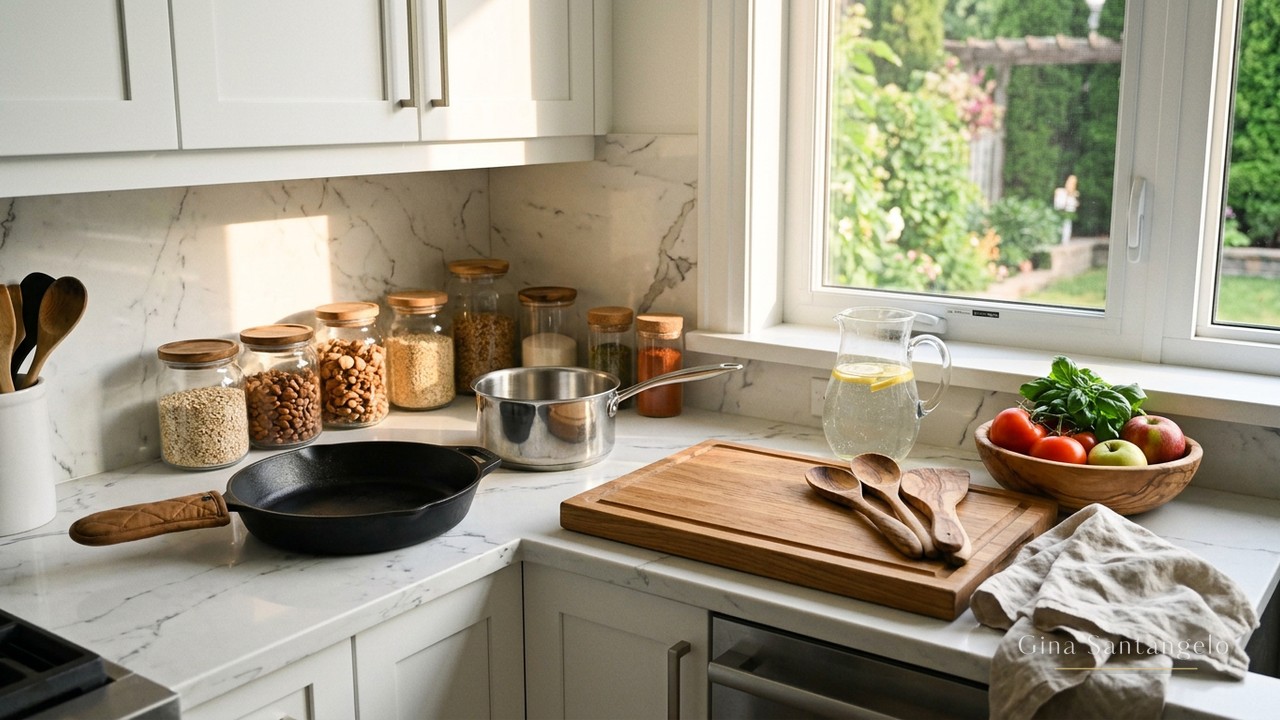
Food is only part of the equation. The cookware, the storage, the utensils, the cutting boards, even your water, all touch what you eat. You don’t need perfection. Small swaps, made over time, meaningfully reduce unnecessary exposure, and none of it has to happen tomorrow.
1 · Why your kitchen matters
We think hard about what we eat, and rarely about what our food touches on the way to the plate. Cookware, storage containers, utensils, cutting boards, and even the water, each is a small point of contact, and small points add up. The good news is that you don’t need to overhaul anything. A few thoughtful swaps, made as things wear out, do most of the work.
2 · Cookware
Traditional nonstick pans are the usual place to begin. Their coatings belong to a family called PFAS, the “forever chemicals”, and while the science keeps evolving, many people would simply rather cook on something else.
There’s a common confusion worth clearing up: modern PTFE coatings are not the same as the older PFOA-containing ones, and regulators state that properly manufactured PTFE has negligible migration into food during normal use. Even so, coatings scratch and wear over time, so many of us choose uncoated cookware to keep overall exposure low. If you do keep nonstick: replace it once it’s scratched, and never overheat an empty pan. (U.S. FDA)
Best everyday options:
- Stainless steel
- Cast iron
- Carbon steel
- Glass bakeware
- High-quality ceramic-coated cookware (PFAS-free)
3 · Cooking utensils
Replace
- Plastic spatulas
- Scratched nylon utensils
- Old plastic ladles
Choose
- Wood
- Bamboo
- Stainless steel
- Food-grade silicone
None of these melt, peel, or shed into a hot pan.
4 · Food storage
Avoid
- Old plastic containers
- Scratched plastic
- Heating food in plastic
- Disposable plastic tubs
Better
- Glass
- Stainless steel
- Silicone storage bags
If you keep some plastic, the one rule that matters most: never microwave in it.
5 · Plastic wrap
A few alternatives worth trying: beeswax wraps, a plate set over a bowl, glass containers with lids, or reusable silicone covers.
6 · Cutting boards
As plastic boards wear, they can shed microplastics into your food. Hardwood boards, ideally one solid piece, are a lovely, durable swap. If you like bamboo, lean toward simpler boards and go easy on the heavily glued composite ones. (The Guardian)
7 · Dinnerware
Watch for
- Chipped vintage dishes
- Imported ceramics without safety testing
- Melamine for hot foods
Choose
- Glass
- Porcelain
- Lead-tested ceramic
8 · Water
Maybe the most important section of all. Filtered water is one of the highest-value swaps in the whole kitchen. Look for an NSF-certified filter, and match it to what you want to reduce, chlorine for taste, or a filter certified for PFAS and the contaminants common in your area. Reverse osmosis goes further if it suits your home.
9 · Coffee
Small things you touch every single day. Prefer paper filters or a stainless French press, a stainless electric kettle, and, where you can, avoid plastic coffee makers whose hot water sits against plastic parts.
10 · Food packaging
Reduce where it’s easy: takeout containers, greasy wrappers, microwave popcorn bags, and heavily packaged foods. The FDA has phased out PFAS grease-proofing agents in U.S. paper food packaging, but leaning on fewer packaged foods is still a sensible way to keep overall exposure down. (U.S. FDA)
11 · Small appliances
It’s worth a glance at what actually touches your food: air fryer baskets, slow-cooker inserts, rice-cooker bowls, blender and food-processor parts. Favor stainless, glass, or ceramic surfaces where you have the choice.
12 · Kitchen cleaners
You can retire most of the harsh stuff. Vinegar, baking soda, an unscented soap, and a few microfiber cloths handle almost everything, cheaper, and kinder to whoever’s breathing the air.
13 · Kitchen towels & sponges
Natural-fiber cloths, washed often, beat heavily fragranced everything. Skip the scented sprays and let clean simply smell like nothing.
14 · The Pantry Detox Checklist
One small step at a time, print this and tick your way through, no rush.
- Replace scratched nonstick
- Replace plastic spatulas
- Replace old plastic containers
- Buy glass storage
- Add a water filter
- Switch to wood cutting boards
- Upgrade cookware over time
My everyday kitchen
What you’ll find in mine, nothing fancy, just things I trust and reach for every day:
- Stainless steel & cast iron
- Glass storage
- Wood utensils
- Filtered water
- Simple cleaning products
Your kitchen doesn’t need to become perfect overnight. Replace things as they wear out. Upgrade one item at a time. Health isn’t built by fear, it’s built by consistent, thoughtful choices.