
Walking: The Most Underrated Hour in Your Week
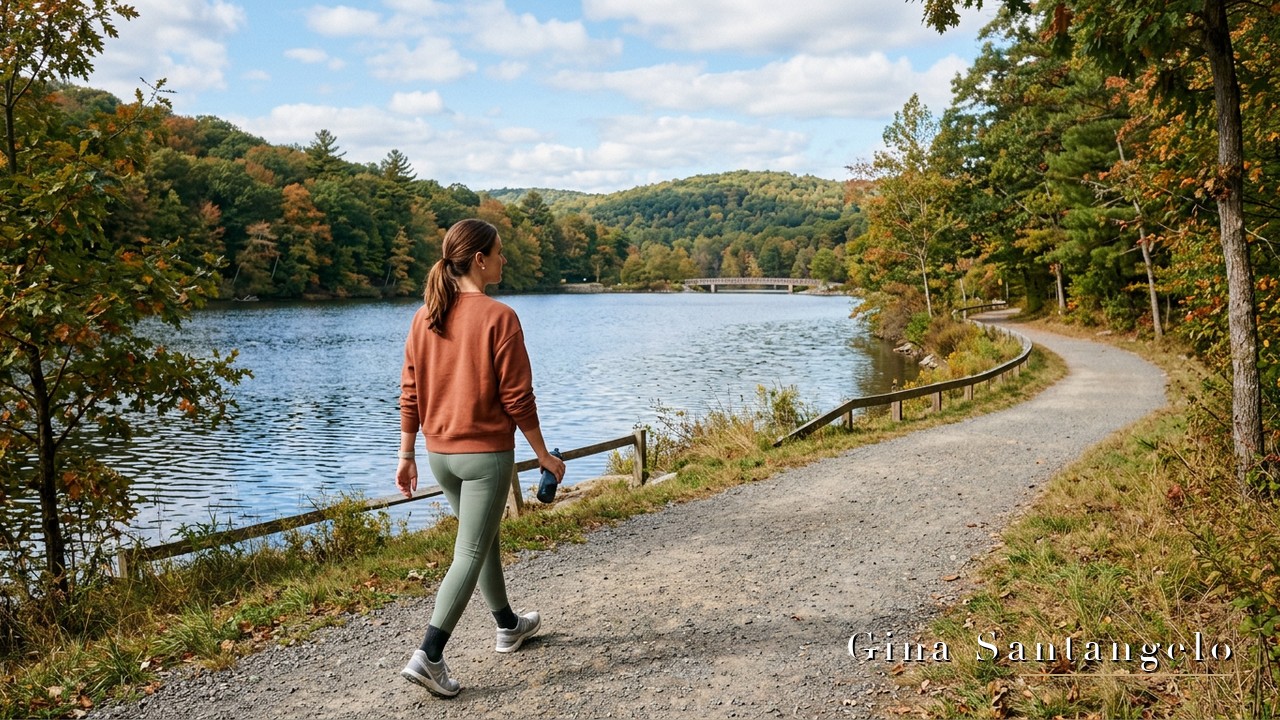
It gets dismissed as what you do when you are not really exercising. Where the 10,000 step figure came from, why pace matters more than total, and the one thing walking will not do for you.
Walking gets dismissed as the thing you do when you are not really exercising. It is, for most women over forty, probably the highest-value hour in the week.
Not instead of strength work. Alongside it. But it is the one that gets skipped precisely because it feels too easy to count.
Why walking is underrated
Partly because it is free and requires nothing, and we tend to value what costs us. Partly because the fitness industry cannot sell it to you.
But mostly because it does not feel like effort, and we have been taught that only effort counts. That belief costs women a great deal, because the things that hold up over decades are almost never the things that felt hardest.
What it actually does
It is weight bearing. Your skeleton responds to being loaded. Walking is loading, every step, which is why it supports bone density in a way that swimming and cycling do not.
It helps blood sugar. A short walk after eating blunts the glucose rise more effectively than the same walk at another time of day. Ten to fifteen minutes is enough to matter.
It moves lymph. The lymphatic system has no pump of its own. It relies on muscle contraction and movement, which is why sitting still all day leaves people feeling puffy and heavy.
It regulates mood. Reliably, and more so outdoors than on a treadmill. The evidence for walking as a mental health intervention is genuinely strong.
It is recoverable. This is the underrated part. You can walk every day without needing recovery from it, which means it accumulates in a way that hard training cannot.
How much, honestly
The 10,000 step figure came from a Japanese pedometer marketing campaign in the 1960s. It was never a research finding.
What the research actually shows is that the largest benefit comes in the early steps. Moving from around 2,000 to 4,000 steps a day produces a bigger change in health outcomes than moving from 8,000 to 10,000. Benefits continue past that, but they flatten.
For most women, somewhere between 6,000 and 8,000 steps a day captures the great majority of the benefit. If you are currently at 3,000, getting to 5,000 matters more than anything you will read about optimal training zones.
Pace matters more than total
If you take one thing from this: some of your walking should be brisk enough that talking becomes slightly awkward.
A gentle stroll is genuinely worth doing and I am not dismissing it. But cadence, how quickly you are stepping, tracks with health outcomes better than step count alone. Around 100 steps a minute is the threshold usually cited for moderate intensity.
You do not need to do the whole walk that way. Ten minutes of brisk inside a forty minute walk changes what that walk is.
Where to fit it
The women who walk consistently are almost never the ones who scheduled a walk. They are the ones who attached it to something that was happening anyway.
After dinner, every night, before you sit down. That one habit alone is often 2,000 steps and lands at the best possible moment for blood sugar.
The phone call you were going to take sitting down. Take it walking.
Park at the far end. Get off a stop early. Take the stairs. None of this is a revelation, and all of it works because it does not require you to find time you do not have.
What walking will not do
I would be doing you a disservice if I stopped there.
Walking will not build muscle. It will not maintain the strength you are losing at roughly one percent a year from your thirties, and it will not load your bones enough on its own to counter the drop in density through menopause. For those you need resistance that progressively increases, which is a different job entirely.
The combination I recommend to almost every woman is walking most days, strength work twice a week, and Pilates for the stability and control that ties it together. That covers considerably more ground than any one of them alone.
If you would like help building the strength half of that, Strength for Life is where I would start you.
Download the printable version, keep it on the fridge or on your phone.
When the mind needs somewhere to land
Everything in this wing points, in the end, to the same place, the breath, and the nervous system beneath it. It is why I built SOVA: a quiet companion for the moments in between.
- Today, a daily practice that aligns you before the day pulls you a dozen directions.
- Companion, a place to process any feeling, even the happy ones.
- Pages, a soft place to set your thoughts down and out of your head.
- The House, rooms of calm to step into, whenever you need one.