
Balance: The Thing Nobody Asks For, and the First Thing I Would Train
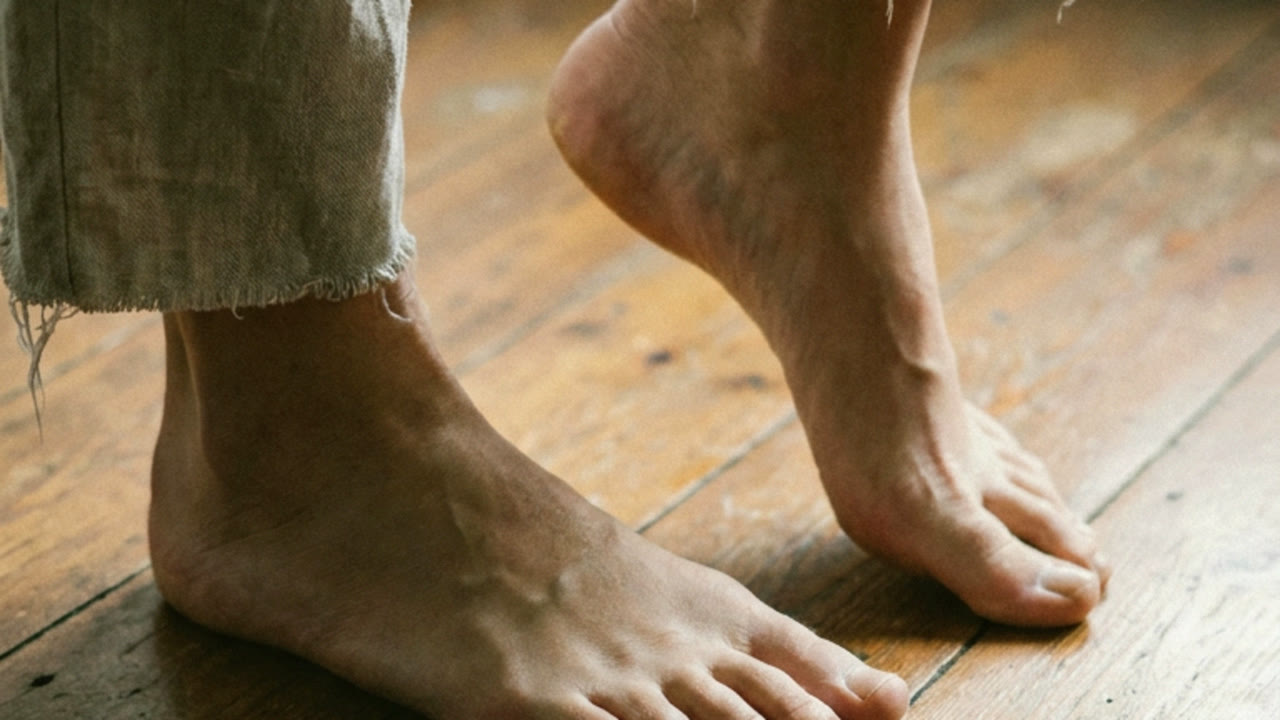
Balance is a trainable skill that quietly fades once modern life stops asking anything of it, and the time to rebuild it is while it still feels unnecessary.
Nobody has ever come to me asking to work on their balance. They come for a back, a hip, a shoulder, or because a doctor said something about bone density.
And yet balance is the thing I would train first, if a woman let me choose.
Why balance quietly disappears
Balance is not a fixed trait you either have or do not. It is a skill, maintained by three systems working together: your inner ear, your vision, and the sensors in your muscles and joints that tell your brain where you are in space.
All three decline gradually from midlife. But the bigger problem is that modern life stopped asking anything of them. Flat floors, handrails, good lighting, level pavements. We removed almost every occasion to be slightly unsteady, and the systems responded by getting worse at their job.
It is the same principle as muscle. Unused, it fades.
Why it matters more than it sounds
A fall is not usually the beginning of a decline. It is the moment an existing decline becomes visible.
The women who fall badly are rarely unlucky. They are women whose balance had been quietly eroding for years, whose legs were no longer strong enough to catch a stumble, and who had no practised correction to draw on when the floor was wet.
The consequences are what make this worth taking seriously. A fractured hip changes a life in a way that very few health events do, and the recovery depends almost entirely on how much strength and stability existed beforehand.
Which means the intervention is not after the fall. It is now, while it feels unnecessary.
Test yourself honestly
Stand near a counter, close enough to catch yourself. Do not do these alone if you are already unsteady.
Single leg stand. Stand on one leg, arms by your sides, and time it. Then the other side. If you are under 60, 30 seconds each side is a reasonable target, and most women find one side is noticeably worse than the other. That asymmetry is useful information.
Eyes closed. The same test with your eyes shut. This removes vision and forces the other two systems to work. Ten seconds is respectable. Most people are startled by how much harder it becomes.
Sit to stand. From a dining chair, stand up and sit down without using your hands, five times. If you cannot, that is leg strength rather than balance, and it is the more urgent of the two.
How to train it
Balance responds quickly, which is one of the more encouraging things about it. Weeks, not months.
Practise while you wait. Single leg stands while the kettle boils. It sounds trivial and it works, because frequency matters more than duration for a skill.
Close your eyes. Once a stand is easy, remove vision. It is the fastest way to make an easy exercise hard without adding anything.
Change the surface. A folded towel or a cushion underfoot forces constant small corrections.
Move while balancing. Static balance is the beginning. Real life is dynamic, so add a reach, a head turn, or a slow leg swing while standing on one foot.
Walk heel to toe. Along a hallway, one foot directly in front of the other, like a slow tightrope.
And build the legs. No amount of balance practice compensates for legs that cannot produce force quickly. Squats, step ups and single leg work are as much a part of fall prevention as balance itself, which is why I have written about it in Why You're Not Getting Stronger.
Where Pilates fits
Pilates is unusually good at this, and not for the reason people assume.
It is not that the exercises are balance exercises. It is that the whole method trains the deep stabilising muscles and the awareness of where your body is in space, which is exactly the third system in that list. Working on an unstable carriage, with springs that respond to how you load them, asks for continuous small corrections in a way that a fixed machine never does.
That is why women who have done Pilates for years often have noticeably better balance than their peers without ever having trained it directly.
Start before it feels necessary
The uncomfortable truth about balance is that the best time to work on it is while you still feel steady, and that is precisely when nobody does.
Thirty seconds on each leg while the kettle boils. That is the whole starting point, and it costs you nothing.
If you want the fuller version, with strength and stability built together, that is the work I do with the women I coach. Start with a conversation.
When the mind needs somewhere to land
Everything in this wing points, in the end, to the same place, the breath, and the nervous system beneath it. It is why I built SOVA: a quiet companion for the moments in between.
- Today, a daily practice that aligns you before the day pulls you a dozen directions.
- Companion, a place to process any feeling, even the happy ones.
- Pages, a soft place to set your thoughts down and out of your head.
- The House, rooms of calm to step into, whenever you need one.