
Joseph Pilates & Contrology
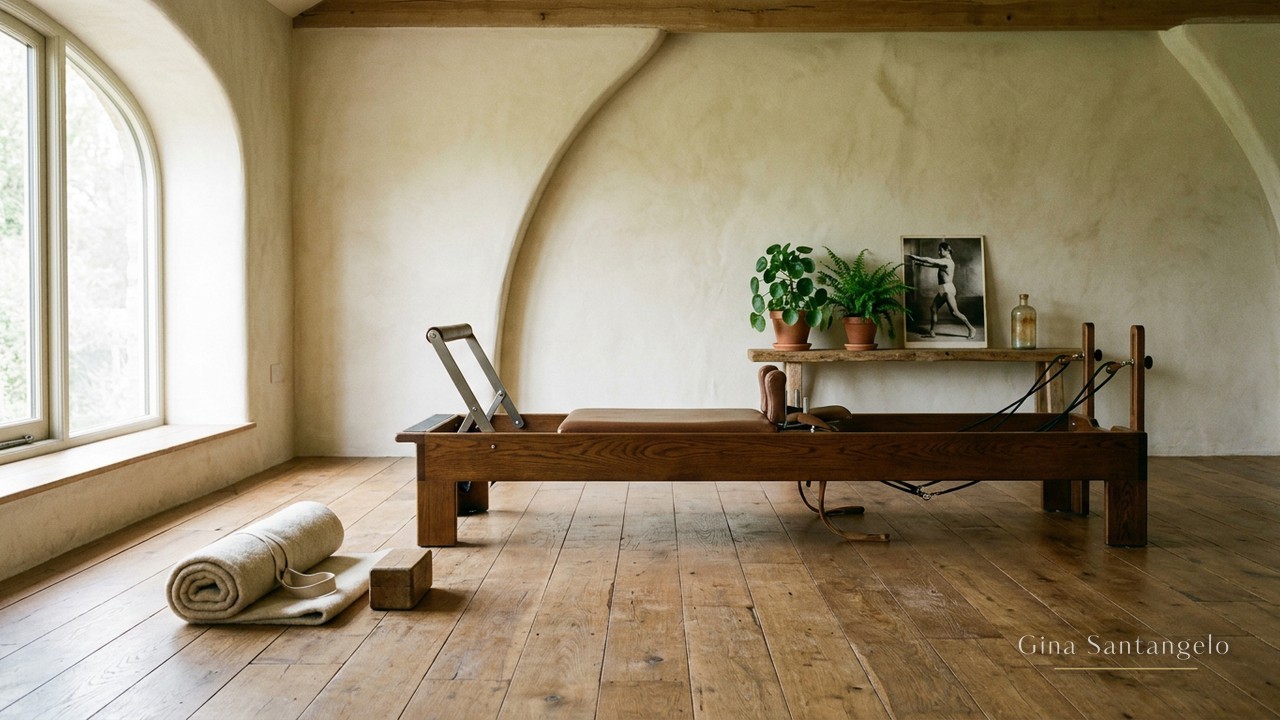
Before it was called Pilates, it was Contrology, Joseph Pilates’ method to coordinate mind, body, and spirit through control. A little history behind the work we do.
Joseph H. Pilates, born in 1883 outside Dusseldorf, Germany, created the method he called Contrology, a legacy of 34 master floor exercises that strengthen and control the abdominals, restore posture, and bring back natural coordination. His movements were built on principles that encourage the body to heal itself.
A few things worth knowing about him
- His father was a gymnast; his mother, who raised nine children, was said to be a naturopath.
- As a child he dealt with poor eyesight and a weak immune system, then became a boxer and gymnast, and found inspiration in the circus.
- During WWI he taught his method to others in the military, and claimed not one of them caught the flu in the 1918 epidemic.
- Working with bedridden patients, he attached springs to hospital beds to support ailing limbs, the basis for the Pilates Reformer, still the most popular studio equipment today.
- In 1925 he moved to the United States, met his wife Clara on the boat, and opened a gym in New York City that drew dancers like Martha Graham and George Balanchine.
The classical movement principles
His work rests on six principles you’ll feel in every exercise: Centering, Control, Concentration, Precision, Breathing, and Flow.
Joseph Pilates was a health thinker far ahead of his time, and we are the fortunate recipients. My GLOW Body method takes these classical roots and carries them forward. See how I’ve shaped them into the GLOW Body Principles, or try his Original 10 mat sequence.