
Pilates vs Yoga: Which One Should You Do?
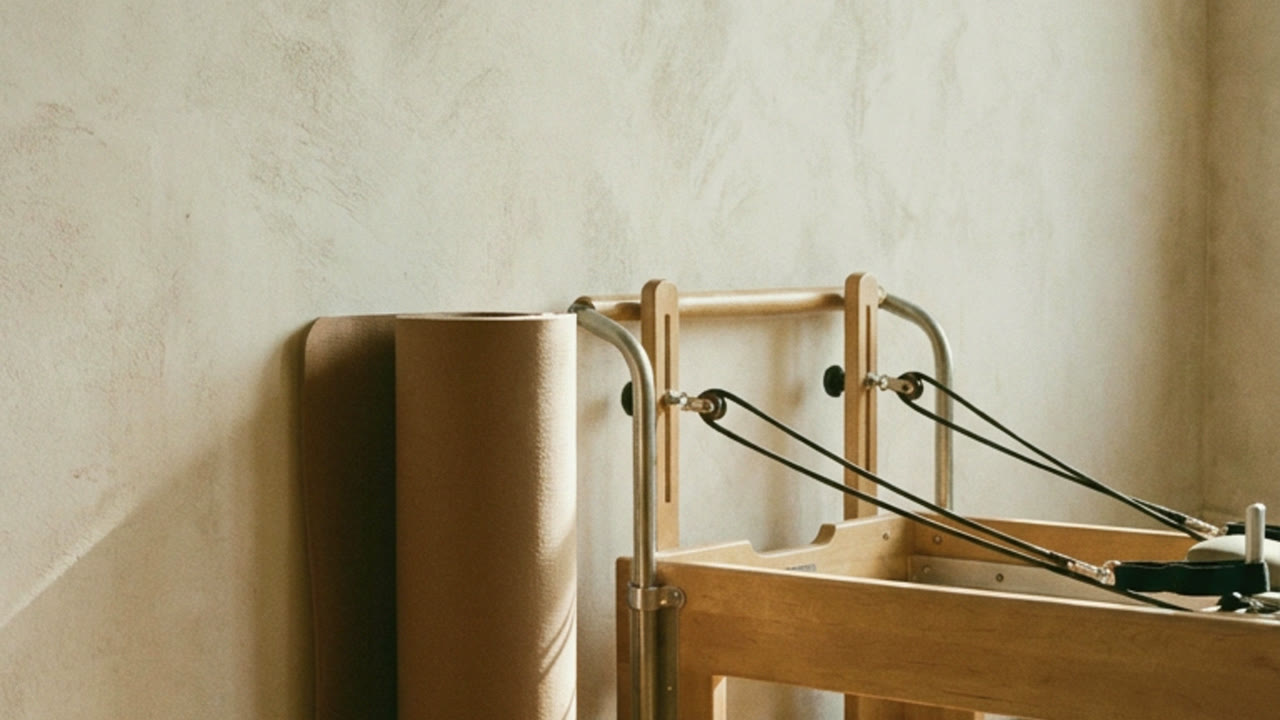
They are less similar than they look. What each is genuinely better at, which one suits a bad back, and the honest answer on bone density, from someone who teaches one of them.
I get asked this more than almost anything else, usually by someone who has tried one, liked parts of it, and is wondering whether the other would suit her better.
The honest answer is that they are less similar than they look from outside, and the right one depends entirely on what you are after.
Where they actually differ
Yoga came out of a spiritual and philosophical tradition thousands of years old. The postures are one limb of something much larger that includes breath, ethics and meditation. Even in its most secular studio form, that lineage is still in the room.
Pilates was invented in the twentieth century by one man, Joseph Pilates, largely as physical rehabilitation. It was built to restore function to bodies that had lost it. There is no philosophy attached, and it has never pretended otherwise.
That difference in origin explains most of what follows.
What each one does well
Yoga is better for flexibility and range. It holds positions longer and takes joints through fuller ranges. If you want to be able to fold, reach and open more than you currently can, yoga will get you there faster.
Pilates is better for control and core strength. The whole method is organised around stabilising the centre while the limbs move. If your issue is a back that keeps complaining, or a sense of being generally loose and uncontrolled, Pilates is the more direct route.
Yoga has the stronger tradition around breath and stillness. If part of what you want is the mental quiet, yoga has spent millennia on that question and Pilates has not.
Pilates has equipment. This is genuinely the biggest practical difference and it is underrated. Springs let resistance be adjusted precisely, in both directions. They can assist a movement you cannot yet do unaided, and load one you find easy. That makes Pilates unusually adaptable to injury, to very different levels of fitness, and to bodies that need supporting rather than challenging.
Which one for a bad back?
Usually Pilates, and I would say that even if I taught both.
Backs that hurt are very often backs that are unstable rather than backs that are tight. The instinct is to stretch, and stretching an already-unstable spine can make it feel wonderful for twenty minutes and worse by evening. Pilates works on control first, which is generally what that back is missing.
The exception is a genuinely stiff back, where restricted movement is the actual problem. Then gentle yoga may be exactly right.
If you are unsure which of those you have, that is what an assessment is for, and it is why I watch someone stand and move before we do anything at all.
Which one for bone density?
This one depends less on which you choose than on how it is taught.
Bone adapts to load that increases over time. A yoga class at body weight, or mat Pilates at the same level every week, will not do much for density however long you keep at it. Equipment Pilates, with spring resistance genuinely increased over months and loaded through the legs and spine, is a different proposition entirely, that is progressive resistance, and it is what the reformer and the chair were designed to deliver.
So if bone density is your concern, the question to ask is not Pilates or yoga. It is whether whoever is teaching you is increasing what they ask of you. If the answer is no, neither will help much. If you want the largest effect available, add heavier compound lifting alongside, because loads that squats and carries put through a hip exceed what springs will reach. I have written about that in What Actually Builds Bone Density.
Which one if you are starting from nothing?
Pilates, and specifically private Pilates, mostly because of the equipment.
A beginner in a group yoga class spends the hour copying the person in front and hoping. A beginner on a reformer has the springs adjusted to her actual body, and someone watching what her shoulders are doing. That is a different first experience, and it matters, because most people who quit exercise quit in the first month.
I have written about what that first session actually involves in What to Expect at Your First Pilates Session.
Do you have to choose?
No, and the women I know who do both tend to get more out of each.
They are genuinely complementary. Pilates builds the control that makes yoga safer, particularly in the deeper backbends and inversions where an unstable spine has somewhere to go. Yoga builds the range that makes Pilates less of a fight.
If you have time for two things a week and want a straightforward answer: Pilates for the structure, yoga for the space. And if you can only do one, choose based on which sentence you would rather have be true in five years, I move more freely, or I am harder to knock over.
Both are good answers. They are just different ones.
If you want to talk through which suits your body, the phone consultation costs nothing and is the honest place to start.
When the mind needs somewhere to land
Everything in this wing points, in the end, to the same place, the breath, and the nervous system beneath it. It is why I built SOVA: a quiet companion for the moments in between.
- Today, a daily practice that aligns you before the day pulls you a dozen directions.
- Companion, a place to process any feeling, even the happy ones.
- Pages, a soft place to set your thoughts down and out of your head.
- The House, rooms of calm to step into, whenever you need one.