
Exploring Pilates: Your Q&A Guide
Pilates is a transformative exercise method that has captured the attention of fitness enthusiasts and newcomers alike. Whether you're curious about i
Pilates is a transformative exercise method that's captured the attention of fitness enthusiasts and newcomers alike. Whether you're curious about its origins, the equipment involved, or the benefits it offers, here's what you need to know.
What is Pilates and how is it different from other workouts?
Pilates is a low-impact exercise system built around controlled movement and a strong, engaged core. Unlike many traditional workouts, it develops strength, flexibility, and endurance while training mind-body awareness at the same time.
Who invented Pilates?
Pilates was developed by Joseph Pilates, a German physical trainer, in the early 20th century. He created it to rehabilitate injured soldiers during World War I, and his techniques evolved over time to blend principles from yoga, gymnastics, and martial arts.
What are the six principles of Pilates?
Pilates is guided by six core principles: concentration, control, centering, precision, breath, and flow. Together, they turn a simple set of exercises into a genuinely holistic practice for the body and the mind.
What equipment is used in Pilates?
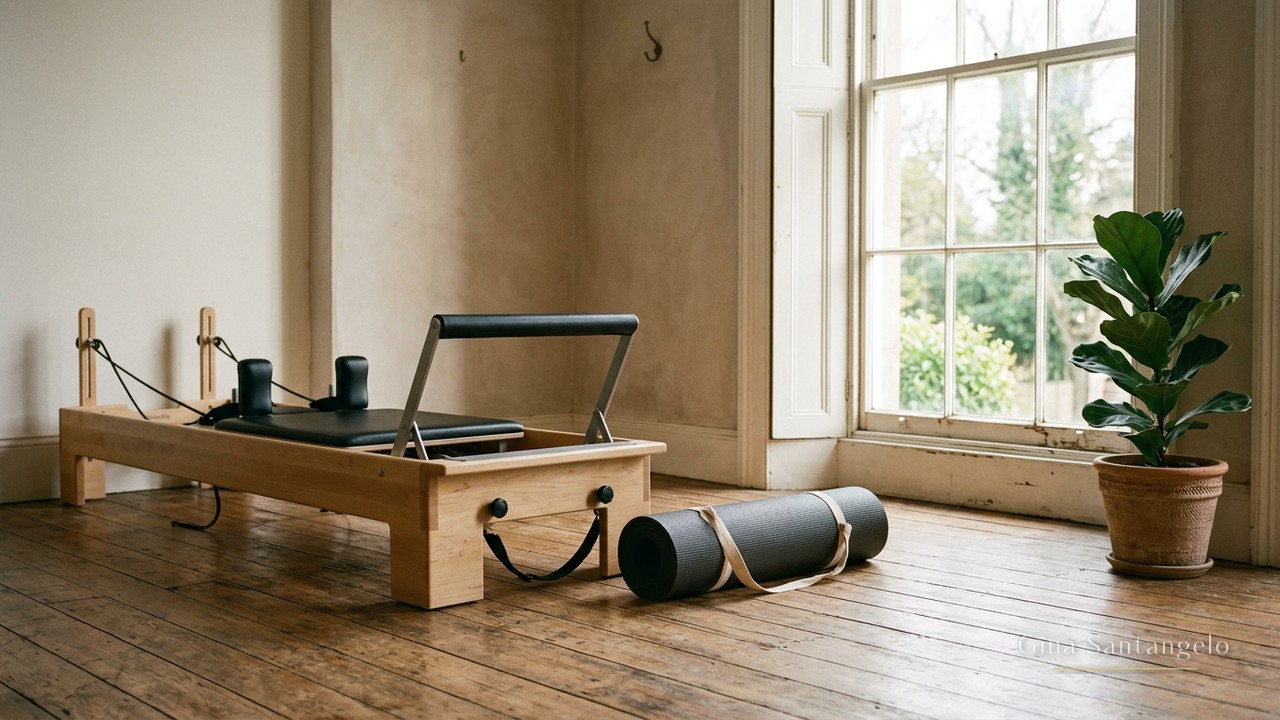
Pilates uses a range of equipment to deepen the practice, including the Reformer, Cadillac, ladder barrel, and stability chair, plus small props like the Magic Circle, Foot Corrector, and Spine Corrector. The mat stays the foundation throughout, using your own body weight for resistance. In my studio, I trained across every piece of this equipment, which is what lets me build a session around exactly what your body needs that day, not just the exercises I happen to know.
What results can I expect from Pilates?
Practiced regularly, Pilates builds core strength, increases flexibility, improves posture, and tones muscle while lowering your risk of injury. Most people also notice a real shift in body awareness and overall well-being.
Is Pilates good for beginners, or all fitness levels?
Yes, completely. Pilates adapts to nearly any fitness level or ability, and it's commonly practiced by athletes, seniors, pregnant women, and people recovering from injury alike. I work with complete beginners and lifelong movers in the same week, meeting each person exactly where they are.
Can Pilates help with weight loss?
Pilates isn't primarily a cardio workout, but it supports weight loss when paired with a balanced diet and some aerobic activity. It builds lean muscle, helps boost metabolism, and improves overall body composition over time.
How often should I practice Pilates to see results?
Once, twice, or three times a week can all bring results, depending on your fitness level, age, and goals. The real goal is finding a rhythm that fits your actual life, so Pilates becomes something you keep doing, not just something you start.
Pilates is a versatile practice built on core strength, flexibility, and the connection between mind and body. Whether you're just starting out or you've been at this for years, there's always more to find in it.
When the mind needs somewhere to land
Everything in this wing points, in the end, to the same place, the breath, and the nervous system beneath it. It is why I built SOVA: a quiet companion for the moments in between.
- Today, a daily practice that aligns you before the day pulls you a dozen directions.
- Companion, a place to process any feeling, even the happy ones.
- Pages, a soft place to set your thoughts down and out of your head.
- The House, rooms of calm to step into, whenever you need one.