
Desk Posture: There Is No Correct Way to Sit
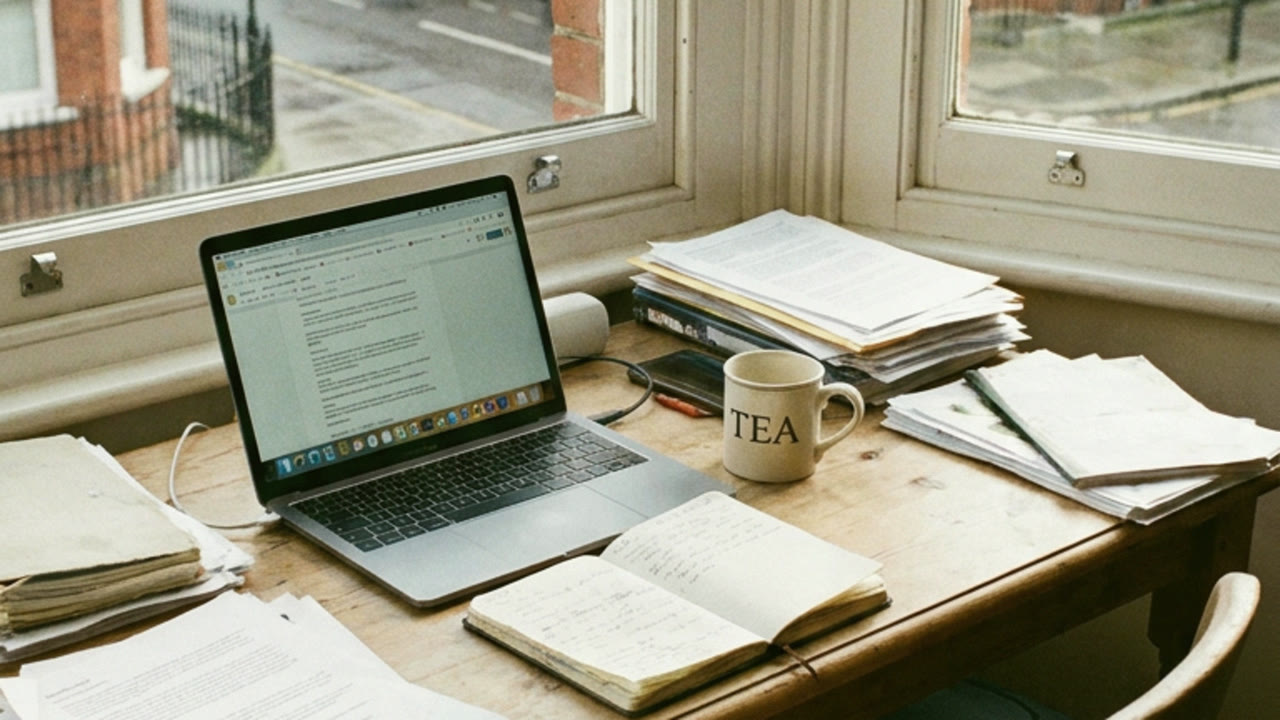
Most advice implies there is one right position and you have been failing at it. The problem is not the shape you hold, it is holding any shape for four hours. What to set up once, and what actually matters.
There is no correct way to sit. That is the first thing worth knowing, because most desk-posture advice starts by implying there is one and that you have been failing at it.
The best posture is the next one. What causes trouble is not the shape you hold, it is holding any shape for four hours.
Why sitting hurts
Not because sitting is dangerous. Because sustained anything is.
Tissue loaded the same way, without variation, gradually complains. Blood flow reduces, some muscles shorten while their opposites lengthen and switch off, and joints sit at one end of their range for hours at a stretch.
Which is why the woman with immaculate ergonomic posture and no movement often feels worse than the one slumping and shifting constantly. The slouching is not ideal. The shifting is doing her a favour.
What long sitting actually does
Hip flexors shorten. They sit in a flexed position all day and gradually adapt. Then you stand up and your pelvis is pulled forward, which your lower back pays for. It is one of the most common contributors to back pain I see, more in Back Pain: What Actually Helps.
Glutes stop working. Sitting on them all day is genuinely a factor. Weak glutes push work to the lower back and the hamstrings.
The head drifts forward. Every inch forward multiplies what the neck and upper back must hold. The muscles between the shoulder blades lengthen and give up; the ones across the chest and up the neck shorten and grip.
Breathing gets shallow. A collapsed ribcage restricts the diaphragm. Most people at a desk are breathing high into the chest, which keeps the nervous system faintly on alert.
Set the desk up once
Worth doing properly, then forgetting about.
Screen top at roughly eye level, an arm's length away. If you use a laptop, it is physically impossible to have both the screen and keyboard right, get a separate keyboard or a stand.
Elbows at about ninety degrees, shoulders down. If your shoulders are up near your ears, the desk is too high or the chair too low.
Feet flat. A box or a book under them if they dangle.
Hips slightly above knees. This does more for a lower back than almost any other single change.
Phone off the desk edge. Looking down at it is the same forward-head load as a bad screen, just concentrated.
The part that actually matters
All of the above is worth ten minutes. The following is worth more than all of it.
Move every thirty minutes. Not a workout. Stand, walk to the kitchen, reach overhead, sit differently. Thirty seconds is enough. Set something to remind you, because you will not remember.
Change position deliberately. Perch, lean, stand for a call, sit cross-legged for ten minutes. Variety is the intervention.
Open the front of the hips daily. A simple lunge stretch, thirty seconds each side, counteracts the single most predictable effect of a sitting day.
Squeeze the shoulder blades. A few times an hour, gently, to wake up what has switched off.
Breathe into the sides of the ribs once an hour. It restores what a collapsed posture has been quietly preventing.
Standing desks are not the answer on their own
Standing still for eight hours produces its own set of problems, and swapping one static position for another mostly relocates the complaint.
They are useful as a way to add variety, alternating, an hour at a time. They are not a solution in themselves.
What Pilates changes about this
Desk posture is not a willpower problem. Most women know they slouch. Knowing does not fix it, because the muscles required to hold a better position have stopped participating and cannot be summoned by intention.
What changes it is training the pattern until it becomes the default, the deep postural muscles, the ones between the shoulder blades, and the awareness of where your ribs sit over your pelvis. That is most of what a Pilates session is doing, whether or not it is described that way.
If you sit for work and your back or neck has been telling you about it, come and have it looked at. It is usually a straightforward thing to change once someone shows you what your body is actually doing.
When the mind needs somewhere to land
Everything in this wing points, in the end, to the same place, the breath, and the nervous system beneath it. It is why I built SOVA: a quiet companion for the moments in between.
- Today, a daily practice that aligns you before the day pulls you a dozen directions.
- Companion, a place to process any feeling, even the happy ones.
- Pages, a soft place to set your thoughts down and out of your head.
- The House, rooms of calm to step into, whenever you need one.