
Oils & Their Heat Limits
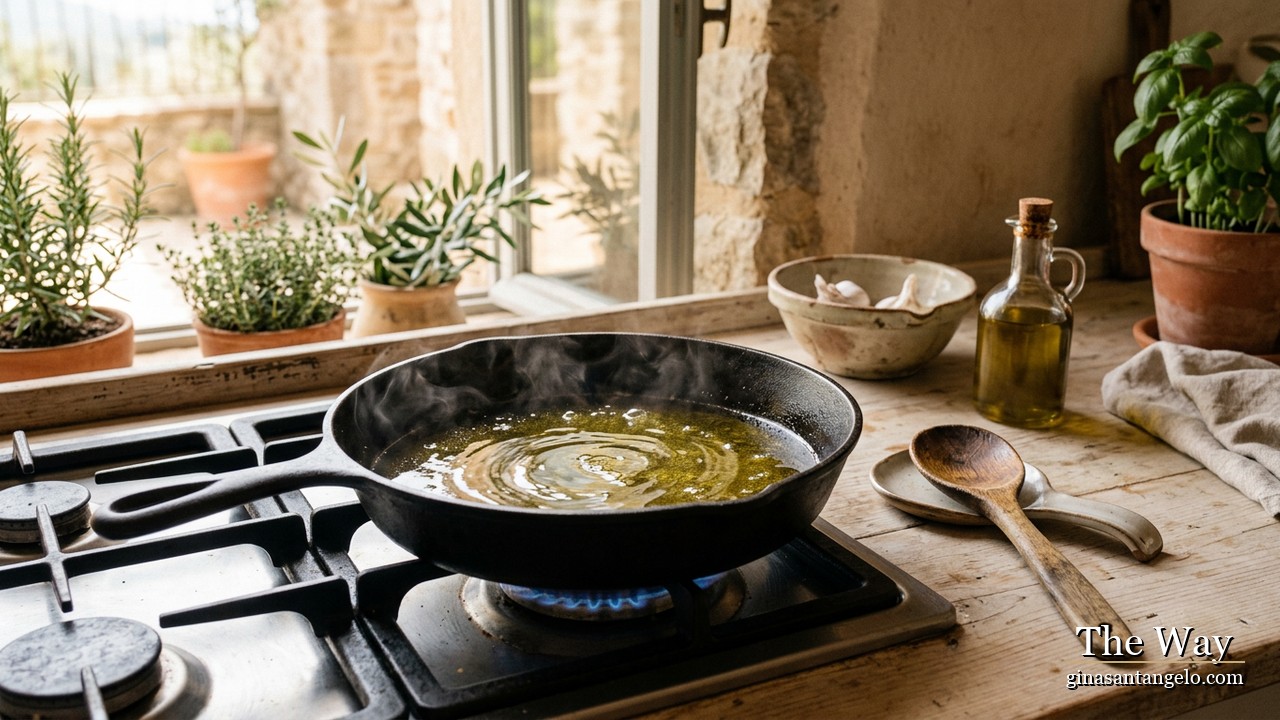
Every oil has a temperature where it starts to break down, smoke, and turn bitter, its smoke point. Cook past it and you waste the oil’s flavor and its benefits, and create compounds you don’t want. Match the oil to the heat, and you’ll rarely go wrong.
What a smoke point actually is
It’s the temperature at which an oil stops shimmering and starts to smoke, the point where it breaks down, releases acrid compounds, and loses its benefits. Past it, oil tastes bitter and turns from friend to foe.
A rough map, coolest to hottest
- Finish only, never heat, flaxseed, walnut, hazelnut (roughly 225–350°F)
- Gentle heat, butter (300–350°F), extra-virgin olive oil (about 350–410°F), virgin coconut (~350°F)
- Medium-high, virgin avocado (~375–400°F), light/refined olive oil (~465°F)
- High heat, searing & frying, refined avocado (~520°F), most refined oils (~400–450°F)
Numbers are approximate, freshness and quality shift them.
The nuance nobody mentions
Smoke point isn’t the whole story. What matters more is oxidative stability, how much an oil actually degrades under heat, and here extra-virgin olive oil punches well above its number. Its antioxidants and low polyunsaturated fat make it more stable than the smoke point suggests, and modern testing keeps showing good extra-virgin holds up beautifully for everyday santéing and roasting.
How to cook without worrying
Use extra-virgin olive oil for most everyday cooking, it’s genuinely fine for sautéing and roasting. Reach for refined avocado oil when you need real high heat. Keep the delicate nut oils off the stove entirely. And if an oil ever smokes in the pan, it’s already past its best.
If your oil is smoking, it’s too hot. Lower the heat, wipe the pan, and start fresh, burnt oil makes everything taste burnt.