
Are Whole Grains Really Healthy?
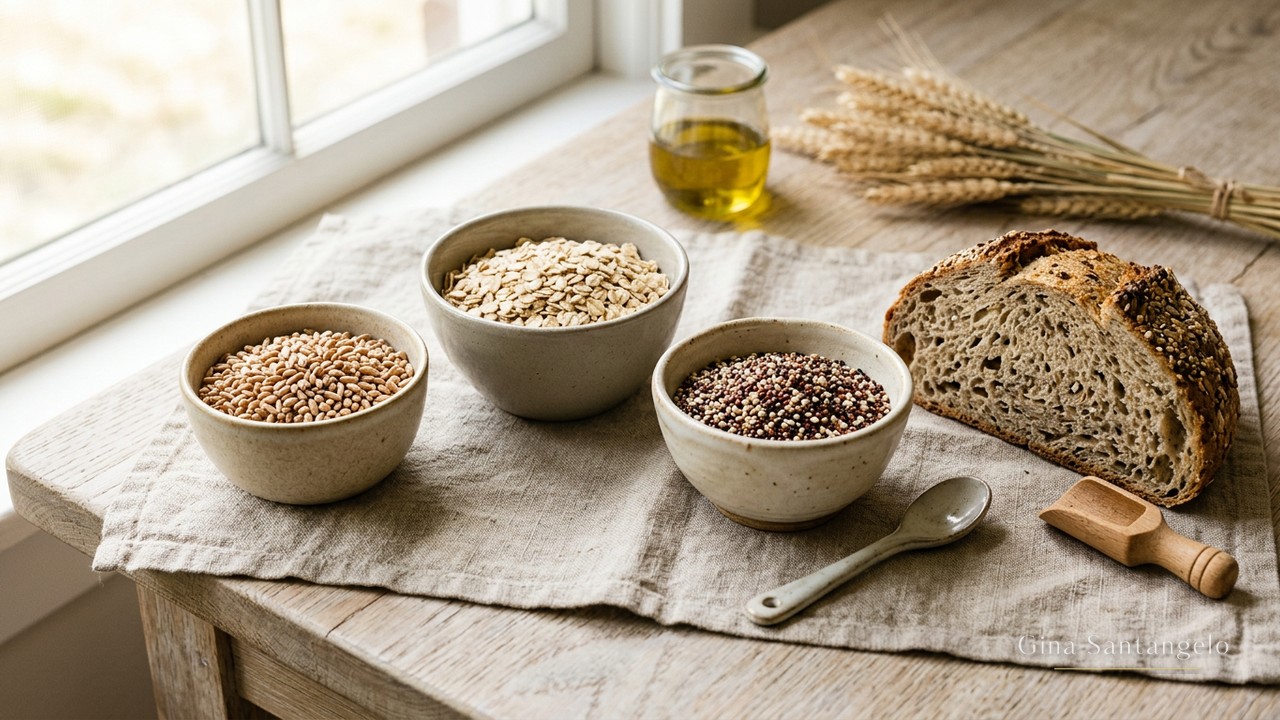
Whole grains get lumped in with “carbs” and quietly dropped. But the whole version of a grain, bran, germ, and all, is a genuinely nourishing food. The trouble was never grains; it was refined grains.
Refined vs. whole, the real difference
Refining strips away the bran and germ, and with them most of the fiber, vitamins, and minerals. What’s left spikes your blood sugar and leaves you hungry an hour later. Whole grains keep all of it.
Fiber, vitamins, and steadier energy
A true whole grain brings fiber, B vitamins, magnesium, and slow-release energy. You stay full and even, instead of riding the spike-and-crash of white bread.
The gluten misconception
Unless you have celiac disease or a real sensitivity, you almost certainly don’t need to fear gluten, and plenty of wonderful whole grains have none anyway.
Portions still matter
Whole grains are a food, not a free pass. A cupped handful cooked is a generous serving; build the plate around vegetables and protein and let the grain play a supporting role.
Best everyday choices
Oats, farro, brown and wild rice, quinoa, barley, buckwheat, and real whole-grain bread. If the first ingredient says “whole,” you’re in good shape.
Who might choose differently
If you have celiac, a diagnosed intolerance, or specific medical guidance, you’ll swap accordingly, there are lovely gluten-free whole grains to lean on.
Whole grains aren’t a rule to obey, they’re a small upgrade you make most of the time. Choose the whole version when you can, keep the portion sane, and let it go on the days you don’t. Consistency, not perfection.