
Why Slowing Down at Meals Matters
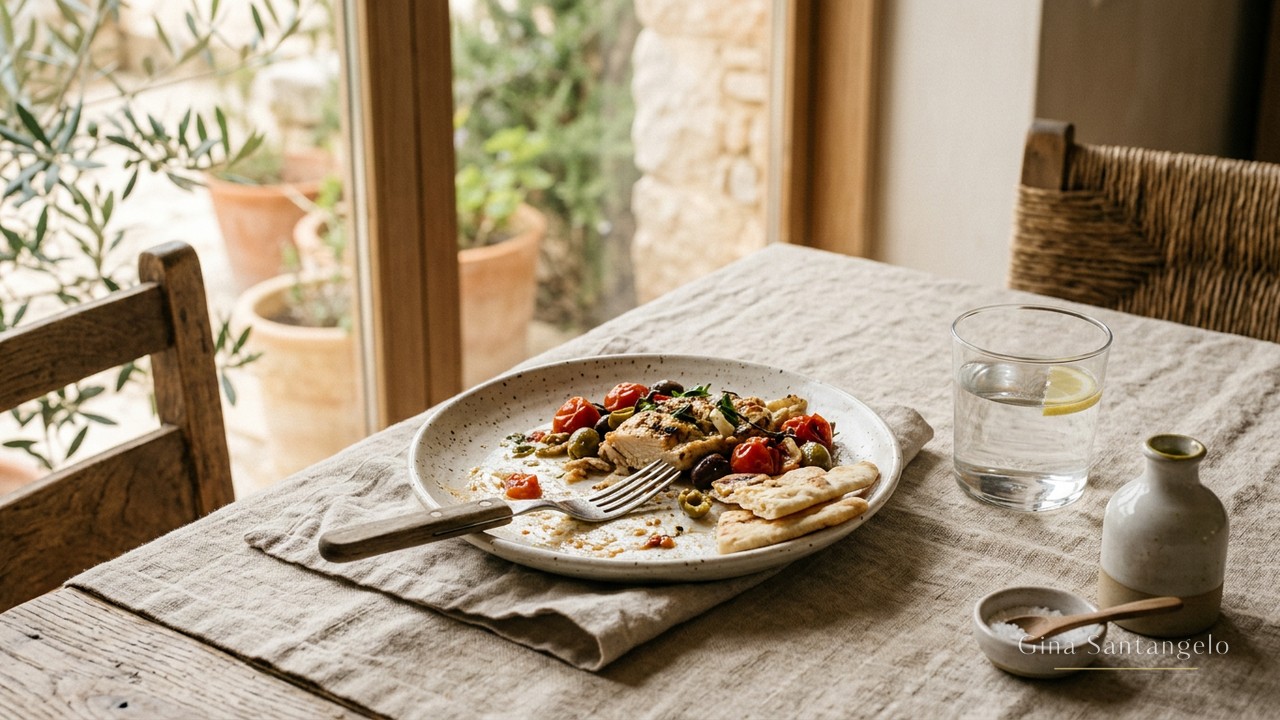
How fast you eat matters almost as much as what you eat. Slowing down, even a little, helps digestion, helps you stop at satisfied, and lets a meal actually feel like one.
Your fullness runs late
It takes about twenty minutes for your body to register that you’re full. Eat quickly and you’ll sail past “satisfied” before the signal ever arrives. Slowing down lets it catch up.
Digestion starts slow
Chewing well and eating calmly is where good digestion begins. Rushed, tense eating asks your gut to do its work in the worst conditions.
The nervous system connection
Eating slowly keeps you in that calm, “rest and digest” state, the opposite of gulping a meal between two stressful things. Your body absorbs food better when you’re not in a hurry.
Simple ways to slow down
Put the fork down between bites. Sip water. Taste one thing fully. Sit at the table. None of it is hard, it just takes a breath of intention.
And you enjoy it more
This is the quiet gift: eaten slowly, food is simply more pleasurable. You taste it, you remember it, and you feel satisfied by less.
You don’t have to eat in slow motion, just a little slower, a little more present. Like everything here, it’s the small habit repeated that changes things, not a perfect performance at every meal.